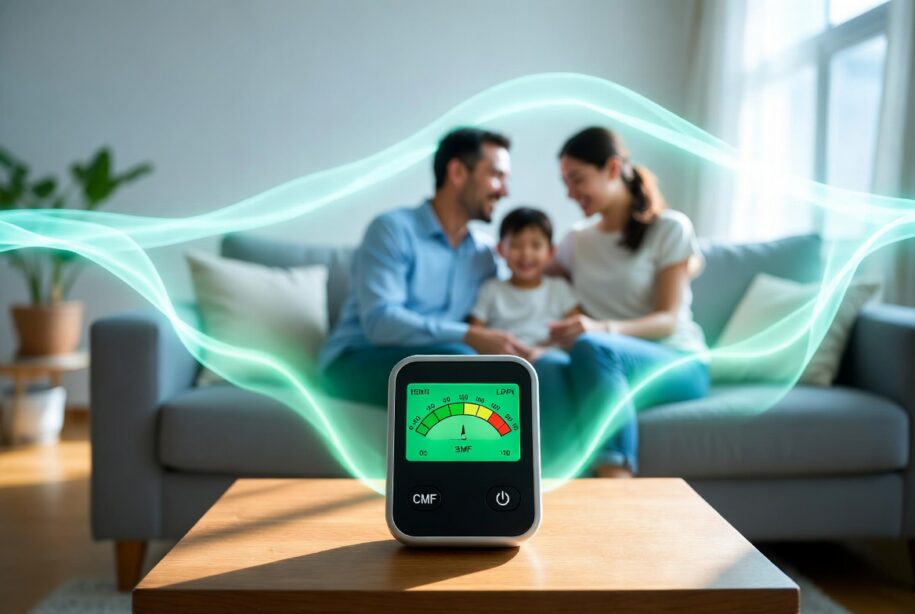
EMF Radiation in 2026: What Does the Latest Science Say?
Hey friend, if you’re a parent, partner, or someone who just wants to do right by your family, you’ve probably wondered about EMF health effects. With phones in every pocket, WiFi everywhere, and 5G towers popping up, it feels like we’re swimming in invisible energy. It’s completely normal to have questions.
The good news? The scientific consensus as of March 2026 remains reassuring. Major health authorities continue to tell us that everyday exposure to radiofrequency electromagnetic fields (RF-EMF) at levels below current safety guidelines does not cause established health problems. But I’m not here to dismiss your concerns—I’m here to walk through the evidence with you like we’re having coffee at your kitchen table.
Today we’ll cover what EMF actually is, what the latest reviews say, why some people feel symptoms, and most importantly—what practical, evidence-based steps you can take to feel more in control.

Understanding Different Types of EMF
Let’s start with the basics. EMF stands for electromagnetic fields—the invisible energy that surrounds anything that uses electricity. Not all EMFs are the same.
Ionizing radiation (like X-rays or UV from the sun) has enough energy to break chemical bonds in your cells. Non-ionizing radiation, which includes the radio waves from your phone, WiFi, and 5G, does not have enough energy to do that. Instead, the main effect that’s well understood is heating—think how a microwave warms food.
RF EMF exposure is the term scientists use for the radio-frequency part of the spectrum we encounter from wireless technology. Your body absorbs some of this energy, which is why safety limits exist.
Most of us grew up thinking “radiation” only meant dangerous things. Understanding the difference helps you worry less about the wrong things and focus on what you can actually control.
Try this today:
Take a moment to notice how many wireless devices are in your home right now. Just becoming aware is the first empowering step.
Current International Exposure Guidelines (ICNIRP, FCC, WHO)
The International Commission on Non-Ionizing Radiation Protection (ICNIRP) sets guidelines that most countries follow. Their 2020 guidelines, still current in 2026, are based on preventing excessive heating of body tissue [3].
These limits include safety margins—often 50 times below the level where any known harmful effects occur. The FCC in the United States and WHO align with these principles.
Specific Absorption Rate (SAR) is the measurement used for phones and devices. It tells you how much RF energy is absorbed by the body. All phones sold in the US and EU must stay well below the legal limits.
Check the latest SAR ratings for popular smartphones here.
Try this today:
Look up the SAR value of your phone in the settings or on the manufacturer’s website. You’ll probably be pleasantly surprised how low it is.

Key Findings from Recent Systematic Reviews
Large systematic reviews conducted between 2020 and 2025 continue to show the same pattern: at levels below international guidelines, there is no consistent evidence of adverse health effects from RF-EMF [1][2][4].
The World Health Organization’s 2024 fact sheet states clearly that “no established adverse health effects” have been demonstrated from low-level RF fields [1]. A 2025 update by Karipidis and colleagues reviewing cancer risk found no consistent link at environmental exposure levels [2].
Thermal effects (heating) are well understood and regulated. Claims about non-thermal biological effects exist in some lab studies, but they are inconsistent and rarely replicated in humans at real-world exposure levels.
Try this today:
When you feel overwhelmed by conflicting online information, come back to the major health authorities. They review thousands of studies so you don’t have to.
5G and Millimeter Waves – New Concerns or Same Science?
5G uses some higher frequencies than previous generations, including millimeter waves. This naturally raises questions. The science, however, follows the same principles.
A WHO panel in November 2025 concluded there is still “no new evidence linking 5G to health problems” [6]. The higher frequencies actually penetrate less deeply into the body than lower frequencies, which is one reason many scientists expected fewer concerns.
Our exposure is also not constant. Your phone only uses high power when it needs to—when you’re streaming or in a low-signal area. Most of the time it’s much lower.
You can read our deeper dive: 5G EMF Myths vs Facts.
Try this today:
Use airplane mode or turn off mobile data when you don’t need it—especially at night. Small habits add up.
Electromagnetic Hypersensitivity: Symptoms vs. Evidence
I want to speak to this with care. If you or someone you love experiences headaches, fatigue, insomnia, or other symptoms when around wireless devices, those symptoms are real. No one should dismiss how you feel.
However, double-blind provocation studies (where people are exposed to real or sham EMF without knowing which) have generally not been able to reliably connect these symptoms to actual EMF exposure [5]. This is called electromagnetic hypersensitivity (EHS).
Many researchers believe other factors—such as stress about technology, poor sleep, or environmental sensitivities—may play a role. The science does not support that EMF is the direct cause for most people reporting these symptoms.
Read our full review here: Electromagnetic Hypersensitivity – Science Review.
Try this today:
If you’re experiencing symptoms, start by improving sleep hygiene and reducing overall stress. Many people notice improvement with these changes alone.
Practical Ways to Reduce Everyday EMF Exposure
The beautiful thing is you don’t need expensive gadgets to lower your exposure. The most effective strategies are simple and free.
- Increase distance from RF sources—the inverse square law means doubling your distance reduces exposure by about 75%.
- Use wired headphones or speakerphone instead of holding the phone to your head.
- Turn off WiFi and mobile data at night or use airplane mode while sleeping.
- Keep phones out of pockets and away from the body—use a bag or desk stand.
- Limit children’s close contact with devices when not necessary.
- Choose lower SAR devices when upgrading.
| Action | Difficulty | Impact |
|---|---|---|
| Use speakerphone or wired headset | Easy | High |
| Keep phone off nightstand | Easy | High |
| Turn off WiFi at night | Medium | Medium |
| Use ethernet instead of WiFi | Medium | High |
Learn how to measure EMF levels in your home here.
Try this today:
Move your WiFi router away from where you spend the most time. Even a few feet can make a measurable difference.

Evaluating EMF Protection Products – What Actually Works?
The market is flooded with stickers, pendants, and “harmonizers” that claim to neutralize EMF. Unfortunately, the majority have no reliable peer-reviewed evidence showing they reduce exposure or biological effects.
What does have evidence?
- Shielded cables and ferrite beads (they reduce conducted interference on wires)
- Distance solutions—desk stands, air-tube headsets
- Properly shielded enclosures for specific situations
We only recommend products that are transparent about what they actually do. Studies suggest these shielding materials help reduce exposure when tested properly.
Try this today:
Instead of buying a sticker, buy an air-tube headset or simply use your speakerphone more often.
Limitations in Current Research and Future Studies
Science is never “finished.” The research brief acknowledges real limitations: 5G is still relatively new, we don’t have decades of data on these exact frequencies, and measuring real-world cumulative exposure is difficult.
Most studies look at single sources, but we live in a world with many sources at once. Children may be more vulnerable simply because their bodies are developing and they have more years of exposure ahead.
Ongoing research is looking at potential oxidative stress mechanisms, but human evidence at everyday levels remains weak.
Try this today:
Focus on what you can control instead of worrying about what we don’t yet know perfectly. That’s the healthiest approach.
Regulatory Positions from FDA, WHO and ICNIRP
In January 2026, the FDA reaffirmed that wireless devices meet safety standards amid growing consumer questions [7]. The WHO, ICNIRP, and FDA all maintain that current limits are protective.
They acknowledge public concern and continue to monitor new research, but no new restrictions or health warnings have been issued based on the evidence through 2025.
Try this today:
Check official sources directly instead of social media when you want the latest position.
Conclusion and Evidence-Based Recommendations
Here’s the bottom line, friend: the science on EMF health effects in 2026 shows that typical exposure from wireless devices is well below levels that cause established harm. You don’t need to live in fear.
At the same time, taking simple steps to reduce unnecessary exposure is reasonable and empowering. Distance, wired connections, and mindful device use are your best friends.
How BeamGuard Helps
At BeamGuard.io, our mission is to give families clear information and practical tools. Our EMF mapping tool lets you visualize estimated EMF levels in different rooms of your home so you can make informed decisions about furniture placement, router location, and sleeping areas.
We also recommend only evidence-based solutions: shielded ethernet cables, ferrite beads for reducing interference, air-tube headsets, and simple distance strategies. No magic stickers or unproven claims.
You deserve to feel confident in your home. We’re here to help you get there—one small, practical step at a time.
Frequently Asked Questions
Are 5G towers dangerous to human health?
According to the WHO in late 2025, no new evidence links 5G to health problems when exposure stays within international guidelines. The signals are highly regulated.
What is the difference between ionizing and non-ionizing radiation?
Ionizing radiation (X-rays, nuclear) can break chemical bonds in DNA. Non-ionizing radiation from wireless devices cannot. It mainly causes heating at high levels, which safety limits prevent.
Does EMF exposure cause insomnia or headaches?
Some people report these symptoms, but blinded scientific studies have not consistently linked them directly to EMF exposure. Other factors like blue light, stress, or sleep habits often play a bigger role.
How can I reduce EMF exposure from my smartphone?
Use speakerphone or wired/air-tube headsets, keep the phone away from your body, use airplane mode at night, and text instead of calling when possible.
Is electromagnetic hypersensitivity a real medical condition?
The symptoms people experience are real. However, well-designed provocation studies have not found a consistent causal link to EMF fields themselves. Consulting a doctor to explore all possible causes is recommended.
Are children more vulnerable to EMF than adults?
Children’s bodies are still developing, and they may have longer lifetime exposure. For this reason, many experts recommend extra caution—keeping devices away from young children’s bodies and encouraging wired options when possible.
References
- World Health Organization. Electromagnetic fields and public health – Base stations and wireless technologies (2024). https://www.who.int/…
- Karipidis et al. Systematic review of RF-EMF exposure and cancer risk in humans: 2020-2025 update (2025).
- International Commission on Non-Ionizing Radiation Protection. ICNIRP Guidelines for Limiting Exposure to Electromagnetic Fields (2020).
- U.S. Food and Drug Administration. Review of Scientific Evidence on EMF and Health (2025).
- Rubin et al. Meta-analysis of electromagnetic hypersensitivity provocation studies (2024).
- WHO. No new evidence linking 5G to health problems (2025-11-12).
- Reuters. FDA reaffirms wireless devices meet safety standards (2026-01-15).
Leave a Reply